
Learn More About Montessori!
Ask a Division Head: How Does Springmont Prepare Students to Read?
May 04, 2026
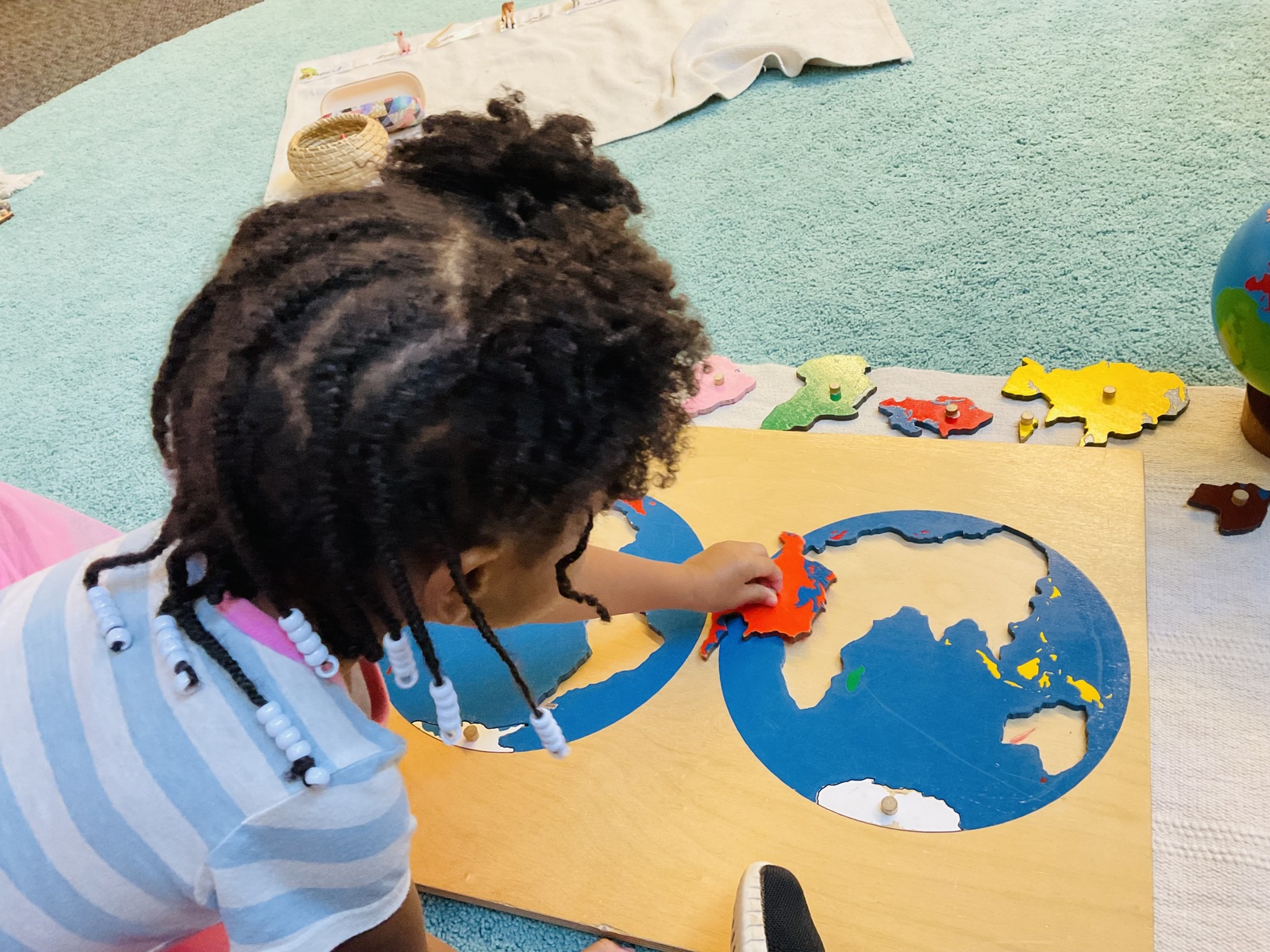
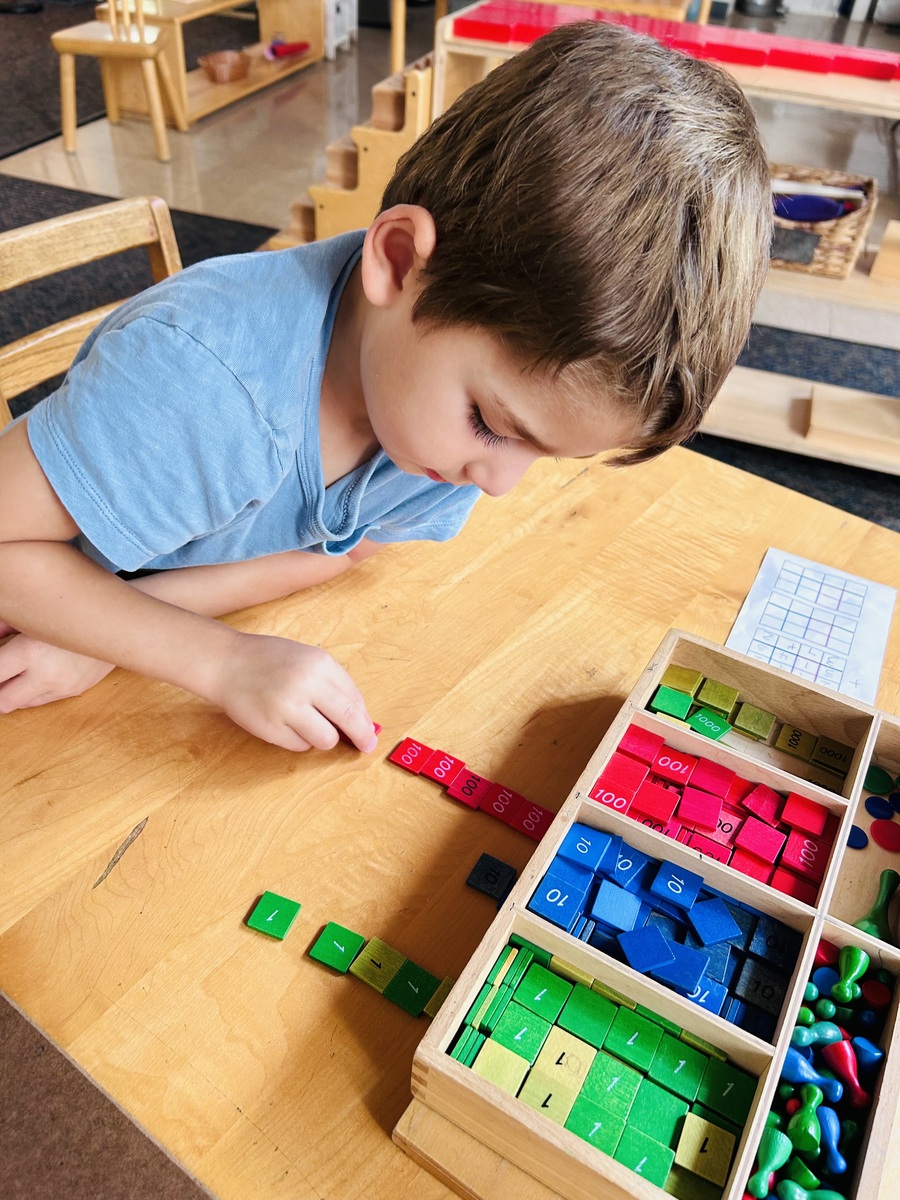
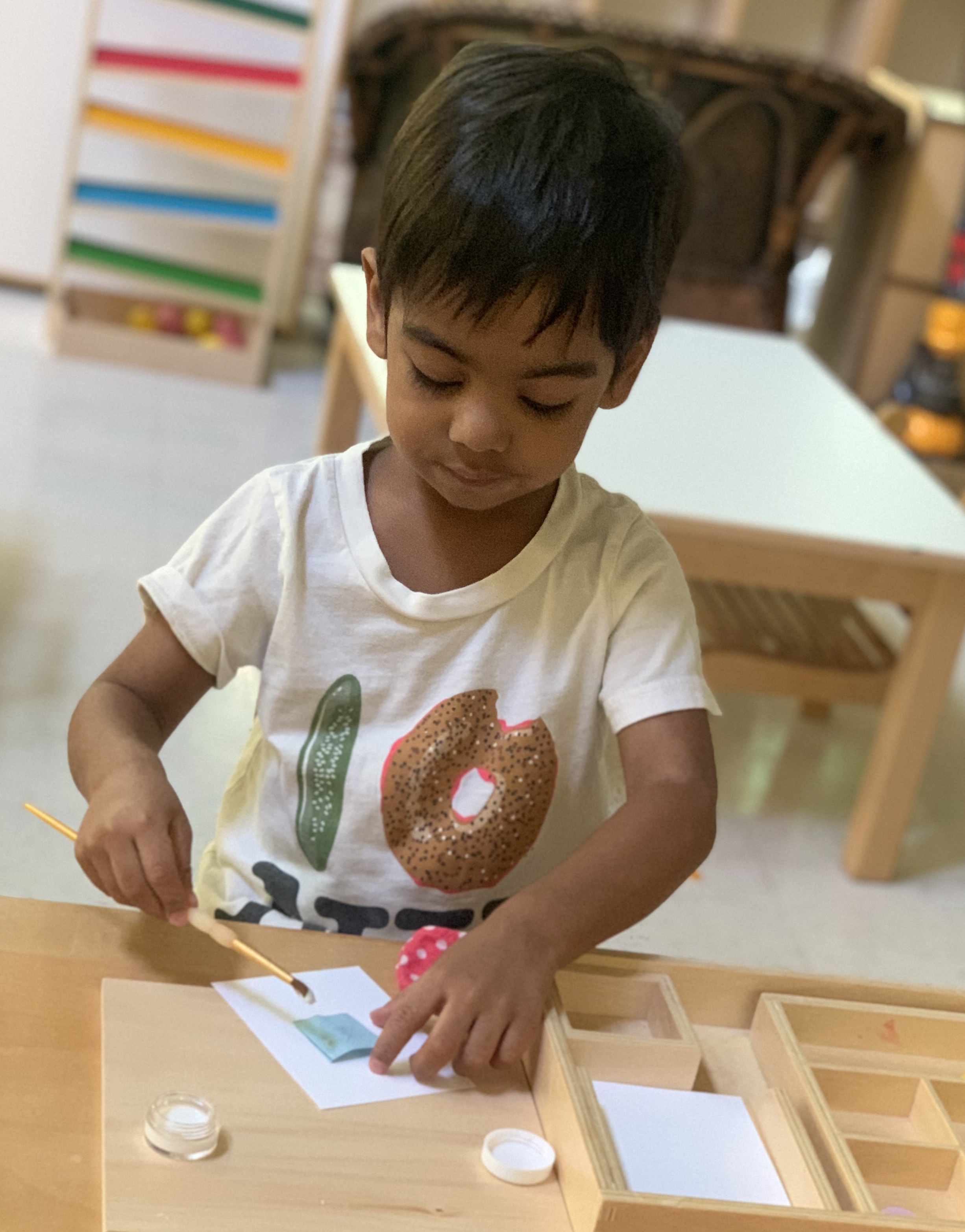
Springmont students begin to develop reading readiness skills as very young Primary students. In the Practical Life area, children learn to complete tasks from beginning to end and to coordinate eye movements by moving left to right. Sensorial materials provide opportunities to observe subtle similarities and differences leading to the skills needed to identify letters and to notice word patterns. Primary children are given more and more complex tasks, allowing them to extend their ability to concentrate for longer and longer periods of time.
Simultaneously, children are exposed to the richness of the English language through songs, poems, books and storytelling as well as the numerous conversations and daily social interactions between the children and teachers. For example, a teacher may guide a young student who is sharing a story about his trip to the beach to include as many details as possible using as much descriptive vocabulary as he is able.
Our multi-aged classrooms expose students to children in various stages of reading which aides in building the confident “I can do it” attitude vital to reading readiness. Teachers guide students to discover their reading skills as they play learning games like “I spy with my little eye…something that begins with the sound 'b'”, a fun exercise in which the student is exposed to word sounds well before being given a lesson with the Sandpaper Letters. Often students are capable of “writing” down their thoughts using the Moveable Alphabet before they are ready to decode and before their fine motor skills are ready to write using pencil and paper. “Writing” or taking words apart through encoding allows children to discover that reading is simply the reverse, putting sounds together to form words via decoding.
You can help your child at home by playing rhyming games - “I’m thinking of something on the table that rhymes with moon.” (spoon) – or by playing “I Spy” - “I spy with my little eye something that start with the sound ‘t’.” (tree). As your child becomes proficient with initial sounds, you can play “I Spy” with ending or middle sounds. Your child will eventually be ready for complex challenges such as “I’m thinking of something that has these three sounds ‘cuh’, ‘aaa’, ‘tuh’.” (cat). Clapping out syllables (banana = 3 claps, pumpernickel = 4 claps) is a fun way to build your child’s awareness of syllables. And most importantly, read to your child each day, before, during and even after they become independent readers.
Books
The Absorbent Mind - by Maria Montessori
Montessori from the Start: The Child at Home, from Birth to Age Three - by Paula Polk Lillard and Lynn Lillard Jessen
How to Raise an Amazing Child the Montessori Way - by Tim Seldin
Positive Discipline for Preschoolers - by Jane Nelsen Ed.D., Cheryl Erwin M.A., and Roslyn Ann Duffy
Positive Discipline A-Z - by Jane Nelsen Ed.D., Lynn Lott, and H. Stephen Glenn
Children Who Are Not Yet Peaceful: Preventing Exclusion in the Early Elementary Classroom - by Donna Bryant Goertz
Montessori Madness: A Parent to Parent Argument for Montessori Education - by Trevor Eissler
Montessori: A Modern Approach - by Paula Polk Lillard
Montessori Today: A Comprehensive Approach to Education from Birth to Adulthood - by Paula Polk Lillard
Montessori: The Science Behind the Genius - by Angeline S. Lillard, PhD
Transforming Education for Peace - edited by Jing Lin, Edward J. Brantmeier, Christa Bruhn
The Montessori Baby: A Parent's Guide to Nurturing Your Baby with Love, Respect, and Understanding - by Simone Davies and Junnifa Uzodike
The Montessori Toddler: A Parent's Guide to Raising a Curious and Responsible Human Being - by Simone Davies
The Montessori Child: A Parent's Guide to Raising Capable Children with Creative Minds and Compassionate Hearts - by Simone Davies and Junnifa Uzodike
Articles
Science: Evaluating Montessori Education
Psychology Today: Montessori Children Often Turn Into Happy Adults
The Wall Street Journal: The Montessori Mafia
Forbes: Is Montessori The Origin Of Google And Amazon?
Huff Post: Montessori: The Missing Voice in the Education Reform Debate
Psychology Today: Montessori Had It Right: We Learn By Doing
Harvard Business Review: Montessori Builds Innovators
La Stampa: Montessori In Mountain View – How Italy’s Famed Educator Shaped Silicon Valley
Slate: The Case Against Grades
Frontiers in Psychology: Montessori Preschool Elevates and Equalizes Child Outcomes: A Longitudinal Study
NAMTA Journal: The Third Plane of Development (12 – 18)
Websites, Podcasts, & Products
Maria Montessori
Montessori Guide
Association Montessori International USA
Association Montessori Internationale
The Montessori Notebook
Carrots are Orange – Montessori Living & Learning for Parents, Teachers, & Homeschoolers
Montessori Education
Montessori in Real Life
Montessori Nature
Aid to Life
All Things Montessori (podcast)