
Learn More About Montessori!
Ask a Division Head: How does Montessori prepare my child for his future?
May 04, 2026
The World Economic Forum recently unveiled a new list of skills key to success in the workplace. The list includes complex problem-solving, critical thinking, creativity, people management and the ability to coordinate with others, emotional intelligence, judgment and decision-making, service orientation and cognitive flexibility. Interestingly, Dr. Montessori recognized the need for these same skills - life skills, not work skills - more than 100 years ago!
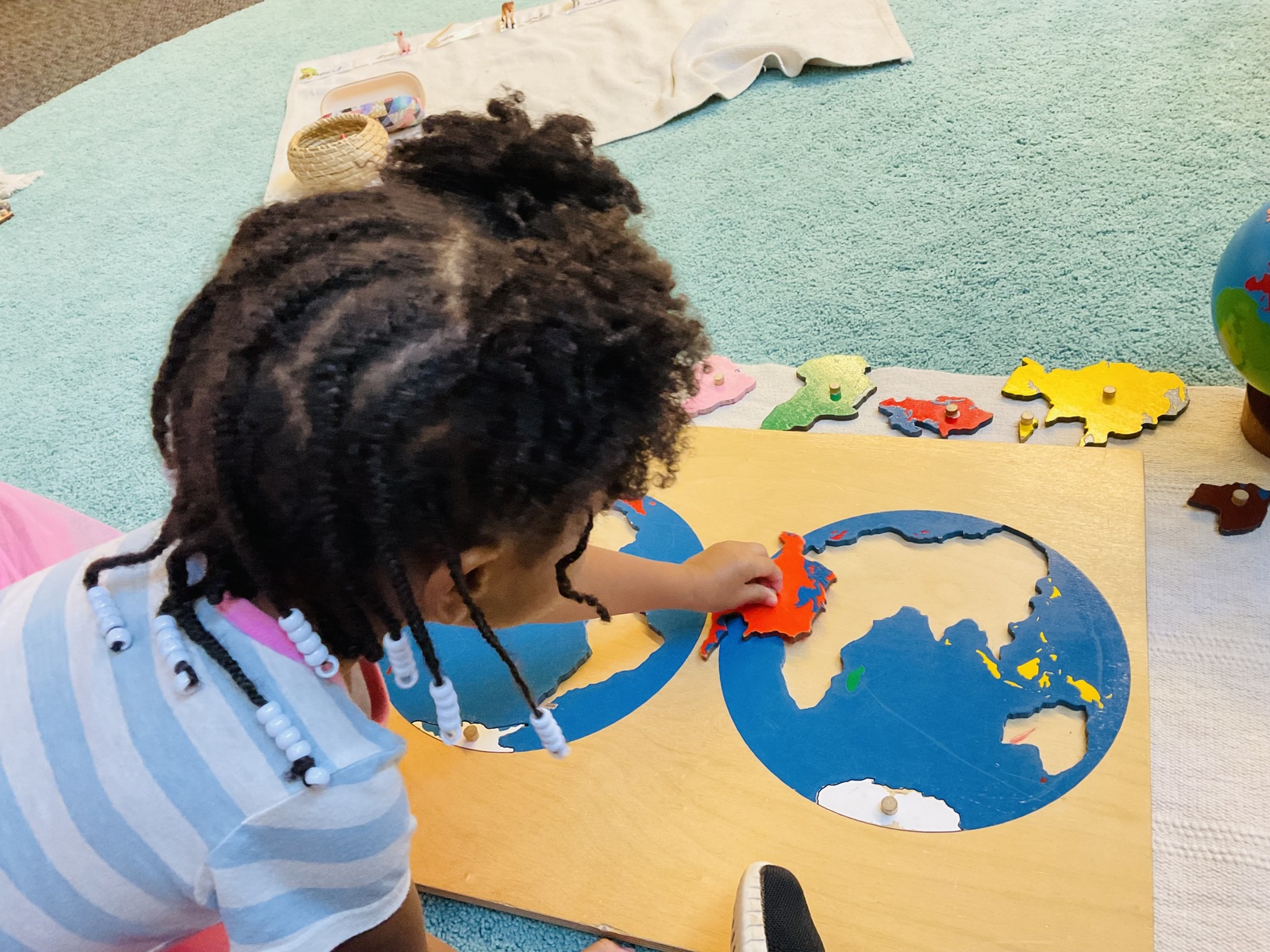
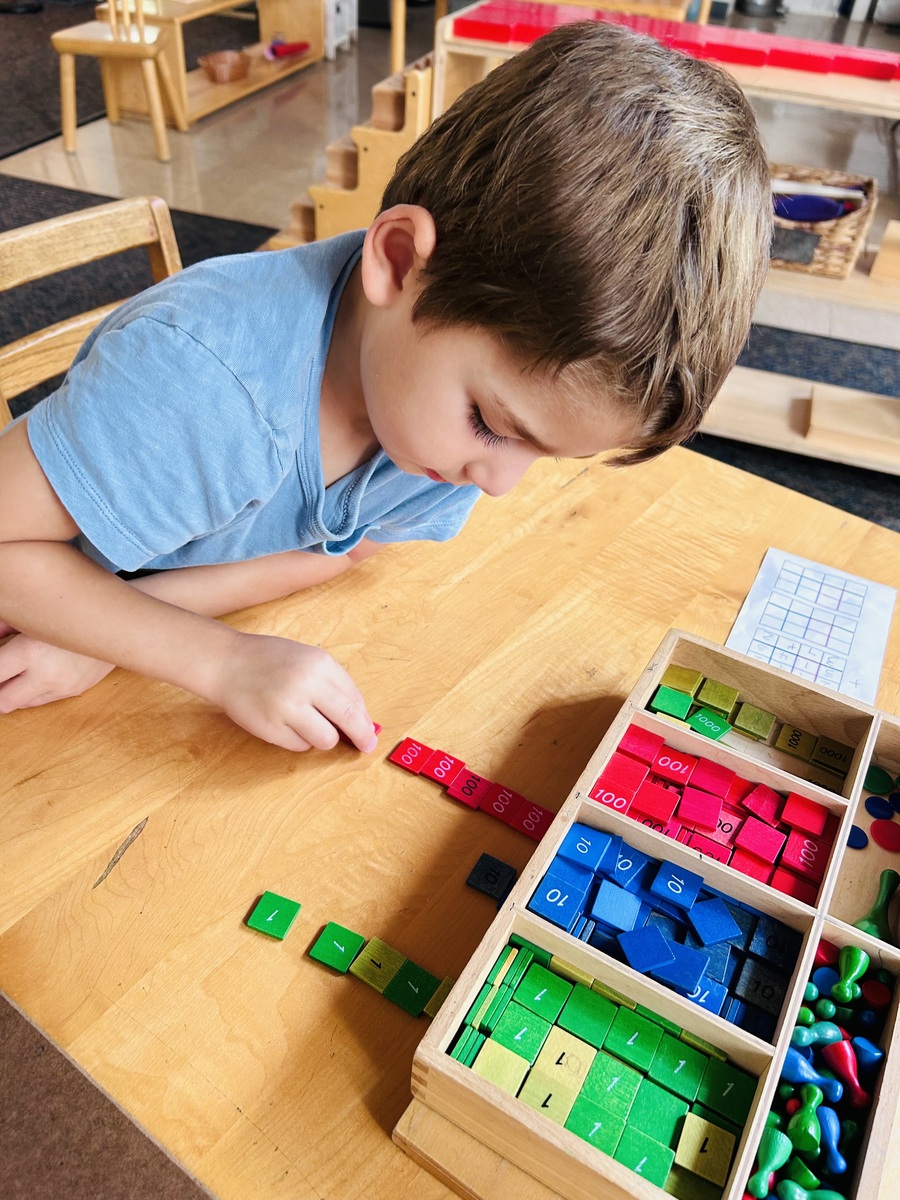
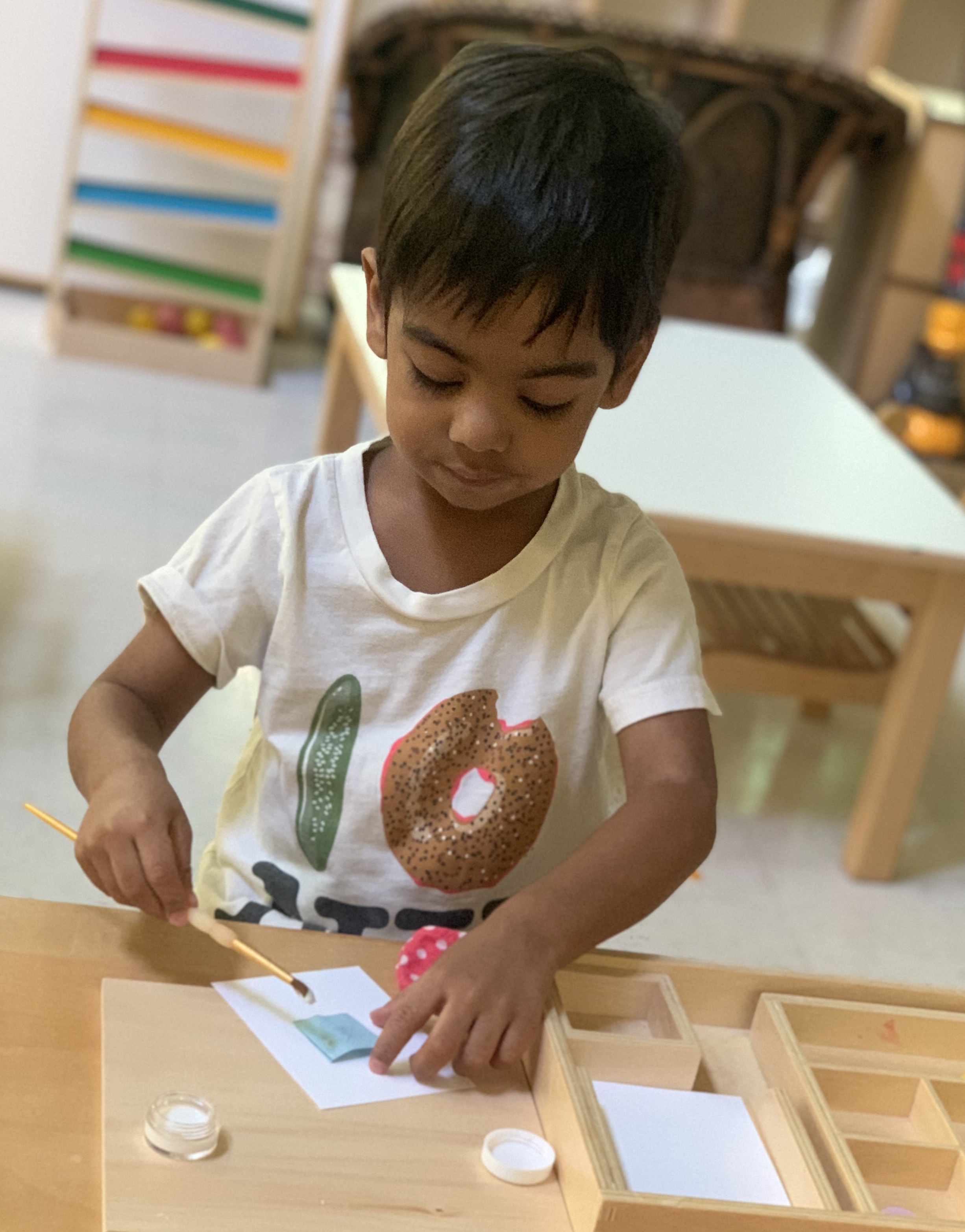
Problem-solving, creativity and decision-making are part of every Montessori lesson, beginning on a child’s first day in a Montessori classroom. For example, the Primary level’s cylinder block lesson involves removing ten cylinders from a block and mixing them up on the table. Examining solely the diameter, the child is challenged to match each cylinder to the correct hole in the block. The block is a built-in control of error, meaning the child gets direct feedback about his success and can problem-solve until the right solution is found without reliance on the teacher. In other words, the material creates an opportunity for the child to think critically and resolve problems independently. Once the child understands a material, he is free to use it in combination with other known elements (for example, another set of cylinder blocks that isolates height), combining them in new and creative ways limited only by the child’s imagination. This sparks new discoveries and builds a brain that thinks critically.
Additionally, the Montessori curriculum spiral allows concepts to be continually revisited and built upon as new knowledge is acquired. Although the classroom is divided into traditional curriculum areas including science, geography, language and math, there is no limit to how a child may combine those concepts. The children are constantly challenged to combine newly acquired knowledge with concepts they already know. This allows them to build not only a body of knowledge but more importantly a network of interconnected concepts. In this way, Montessori children learn to see the world in innovative ways, and cognitive flexibility is a natural outcome.
The Montessori philosophy acknowledges that social interactions are as important to a child’s development as intellectual pursuits. Many lessons are designed to meet both needs and allow children to gain experience negotiating a task done within a small group. Over time, each child learns to self-advocate and to recognize, appreciate and draw upon the skills of all group members. They learn that a successful outcome requires coordination and effective negotiation. Imagine how different your workplace might be if each of your co-workers had begun learning those skills before they were six years old! Montessori children benefit from almost two decades of practice before entering the workplace.
Finally, emotional intelligence and service orientation are not forgotten within a Montessori classroom. Grace and Courtesy lessons and modeling appropriate social behaviors are at the forefront of teaching these skills. Reminding young children about the right time to say “Please” and “Thank you,” how to evaluate and express one’s feelings, and the importance of having empathy for others is invaluable. When children understand their own emotions and how their words and actions affect others, they can assume a leadership role in the creation of a peaceful, joyful classroom community now, and in the future, a cohesive, collaborative and productive workplace. The skills your child will need tomorrow are developing in his Montessori classroom today!
Books
The Absorbent Mind - by Maria Montessori
Montessori from the Start: The Child at Home, from Birth to Age Three - by Paula Polk Lillard and Lynn Lillard Jessen
How to Raise an Amazing Child the Montessori Way - by Tim Seldin
Positive Discipline for Preschoolers - by Jane Nelsen Ed.D., Cheryl Erwin M.A., and Roslyn Ann Duffy
Positive Discipline A-Z - by Jane Nelsen Ed.D., Lynn Lott, and H. Stephen Glenn
Children Who Are Not Yet Peaceful: Preventing Exclusion in the Early Elementary Classroom - by Donna Bryant Goertz
Montessori Madness: A Parent to Parent Argument for Montessori Education - by Trevor Eissler
Montessori: A Modern Approach - by Paula Polk Lillard
Montessori Today: A Comprehensive Approach to Education from Birth to Adulthood - by Paula Polk Lillard
Montessori: The Science Behind the Genius - by Angeline S. Lillard, PhD
Transforming Education for Peace - edited by Jing Lin, Edward J. Brantmeier, Christa Bruhn
The Montessori Baby: A Parent's Guide to Nurturing Your Baby with Love, Respect, and Understanding - by Simone Davies and Junnifa Uzodike
The Montessori Toddler: A Parent's Guide to Raising a Curious and Responsible Human Being - by Simone Davies
The Montessori Child: A Parent's Guide to Raising Capable Children with Creative Minds and Compassionate Hearts - by Simone Davies and Junnifa Uzodike
Articles
Science: Evaluating Montessori Education
Psychology Today: Montessori Children Often Turn Into Happy Adults
The Wall Street Journal: The Montessori Mafia
Forbes: Is Montessori The Origin Of Google And Amazon?
Huff Post: Montessori: The Missing Voice in the Education Reform Debate
Psychology Today: Montessori Had It Right: We Learn By Doing
Harvard Business Review: Montessori Builds Innovators
La Stampa: Montessori In Mountain View – How Italy’s Famed Educator Shaped Silicon Valley
Slate: The Case Against Grades
Frontiers in Psychology: Montessori Preschool Elevates and Equalizes Child Outcomes: A Longitudinal Study
NAMTA Journal: The Third Plane of Development (12 – 18)
Websites, Podcasts, & Products
Maria Montessori
Montessori Guide
Association Montessori International USA
Association Montessori Internationale
The Montessori Notebook
Carrots are Orange – Montessori Living & Learning for Parents, Teachers, & Homeschoolers
Montessori Education
Montessori in Real Life
Montessori Nature
Aid to Life
All Things Montessori (podcast)