
News
News
At Springmont, we’re proud of our school and like to share the accomplishments of our students, alumni, faculty, and staff. Here you’ll find information about Springmont, including recent school news, articles about our curriculum, and other interesting items. For additional press or media information, please contact Julie Strickland jstrickland@springmont.com or 404.252.3910.
Why Doesn’t My Child Get a New Lesson Each Day?
March 23, 2026
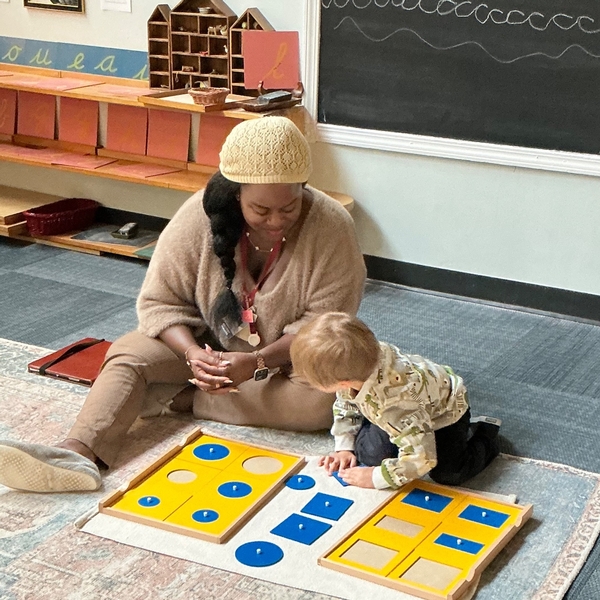
Because the Montessori method prioritizes self-directed learning and mastery through repetition, Montessori students typically do not receive a new, teacher-led lesson every day. Instead, teachers give lessons tailored to individual children’s readiness, allowing them to practice and master skills independently at their own pace.
Key reasons for this approach include:
- Individualized Instruction: Lessons are given based on the teacher’s observation of each child, not a strict daily schedule. Teachers offer new lessons when they observe that a child is ready to advance, needs a challenge, or has shown interest in a new topic.
- Agency & Engagement: Instead of passively receiving daily instruction, Montessori students are often self-directed, reinforcing a love of learning, concentration, and independence.
- A Focus on Repetition & Mastery: Montessori is a mastery-based approach designed to refine both motor skills and cognition. Once a lesson is given, a student may work with a material for days or weeks to build proficiency and confidence. Students do receive “reminder lessons” as teachers circulate in the classroom, answering questions or offering help as students work independently to master materials, concepts, and skills.
- The Gift of Time: Rather than being interrupted by frequent teacher-led lessons, students engage in long, uninterrupted 3-hour work blocks that promote deep focus and independent exploration.
- Hands-on Montessori Materials: Students use the self-correcting Montessori materials to learn and explore, rather than simply being taught by the teacher. In a sense, the materials continue to teach the child.
- Power Skills: Previously called “soft skills,” power skills include communication, empathy, collaboration, adaptability, and emotional intelligence. In addition to academic lessons, teachers give lessons about how to navigate conflict with peers, work as a team, and express one’s thoughts and feelings respectfully. In the age of AI, these social/emotional skills will be even more important than technical skills.
Essentially, the Montessori method focuses on high-quality, high-fidelity learning rather than the number of lessons provided by the teacher.
“The greatest sign of success for a teacher... is to be able to say, ‘The children are now working as if I did not exist.’” — Montessori, M. (1966). The Secret of Childhood, p. 283

1 day ago
4 days ago